Blog
Engineering the Future Forward
Exploring the latest digital enginering use cases, industry trends, and Rescale platform innovations.

Blog
Exploring the latest digital enginering use cases, industry trends, and Rescale platform innovations.


What the biggest trends of 2026 mean for data and AI leaders and how Rescale…

A redesigned interface that introduces new capabilities for data intelligence, and agentic workflows, and AI…

AI agents can now handle routine simulation tasks while flagging key decision points that require…
Scientific & Engineering Design Evolves from Prototypes to Simulation to AI Scientific and engineering simulation changed the game by enabling R&D professionals to test design parameters digitally rather than physically through prototyping, and therefore iterate faster on designs. Simulation based on physics solvers, while faster and cheaper than prototyping, can still be very computationally intensive…

How do you choose the best combinations of compute resources to optimize complex HPC simulations? AI Recommendations Are Showing us the Way Forward! Complex simulations that utilize high-performance computing (HPC) are becoming even more complex just to run due to proliferating hardware and software optionality. For many of us, cloud services can simplify the infrastructure…
Rescale Expands GCE and GKE Integrations with New Arm-based Instances Innovative organizations rely on Rescale to provide the latest cloud technologies to power their scientific and engineering high performance computing (HPC) simulations and AI workflows. Customers across many industries are running all types of specialized HPC and AI workflows on Rescale that benefit from specialized…

OVERVIEW The Case for Benchmarking in Cloud HPC Modernization R&D and engineering teams developing new, more advanced products are demanding more high-performance computing (HPC) resources to power their computation-intensive applications. At the same time, there has been an explosion of specialized HPC hardware in the cloud, pushing many organizations to explore new ways to deploy…
Engineers will always want to run large-scale, high-fidelity simulations as often as possible. How does shifting from on-prem to cloud make dreams into reality? Solving Problems with MDO and HPC Cloud Multidisciplinary design optimization (MDO) uses optimization methods to solve problems by incorporating several design disciplines simultaneously. When compared with solutions derived by optimizing each…
5. Cloud HPC: From Manual to Automated Traditional HPC is Manual The traditional HPC approach is usually script-based and therefore manual for managing engineering workflows and IT operations. There is no easy and fast way for engineers to automate end-to-end workflows for efficiency, nor for IT to automate control of multi-cloud infrastructure, applications, and security…
4. The Five Winning Strategies: From Static to Intelligent Traditional HPC is Static Given the traditional tightly-coupled approach to HPC, performance and analytics intelligence was not critical. Configurations, once stable and tuned, we not changed often, and there was no reason to, also giving little reason to invest in software/hardware performance analytics. Maintaining this approach…

3. The Five Winning Strategies: From Siloed to Connected Traditional HPC is Siloed Because traditional HPC approaches are based on tightly-coupled and bespoke technology stacks, and focus on driving high utilization of expensive computing infrastructure, there is typically little consideration for data sharing, collaboration, or integration with other systems. The result is that organizations that…
2. The Five Winning Strategies: From Inflexible to Unlimited Traditional HPC is Inflexible Traditional HPC approaches lead to tightly coupled stacks, with performance optimized for specific software/hardware combinations. This tightly coupled approach limits access to different hardware architectures, software packages (or software versions), different cloud providers, different cloud provider computing regions, as well as whether…
1. From Hardware-centric to User-centric Traditional HPC is Hardware-centric The traditional HPC approach continues to focus on maximizing hardware utilization because IT’s goal has typically been to ensure that the usages of hardware justify the cost. With finite computing capacity, IT must ensure hardware resources are not wasted. A common tool businesses use in trying…
Editors note: This post is the introduction to a 6 part blog series. Read the full report here. Empowering new product development teams to innovate faster is front and center in an enterprise’s strategy to stay competitive. Yet commercializing science & engineering breakthroughs is increasingly difficult. According to Gartner’s 2021 R&D Leadership Council Report, 90%…
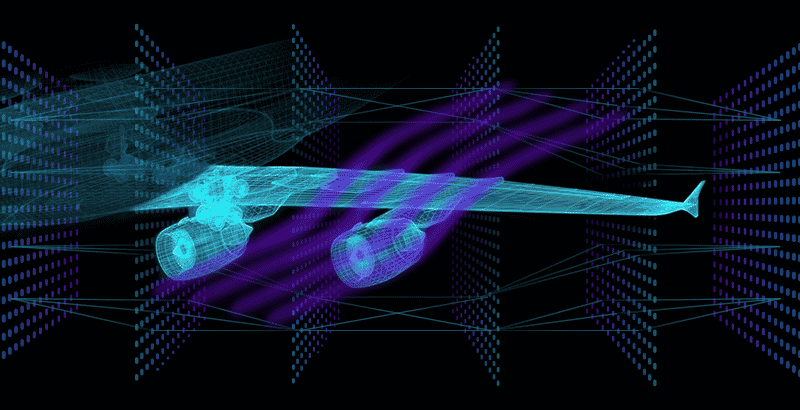
By using machine learning techniques, an airfoil design process using iterative simulations was eightfold faster to complete than using traditional methods.
Today’s digital ecosystem is fraught with risk especially given our increasingly connected lives and a climate of geopolitical instability and cyber crime. A recent survey revealed that “84% [of respondents] claimed to have suffered one or more successful cyber-attacks in the past 12 months, with over a third (35%) saying they’d experienced seven or more”…

New product engineering offers a set of challenges, which are often even more complex for technologically advanced products like autonomous vehicles or fusion reactors. One of the best ways to address these difficulties is through high-performance computing (HPC). Compared to traditional on-premises HPC, cloud HPC gives engineers increased access to computing resources without needing to…

Navin Bagga, Solutions Architect EMEA Tell Us About Your Background? As I come close to the tail-end of my second decade working in the Information Technology space, I believe I have been lucky to have experienced quite a variety of roles. These have ranged from working in data-centers, to consulting on core Microsoft infrastructure solutions,…
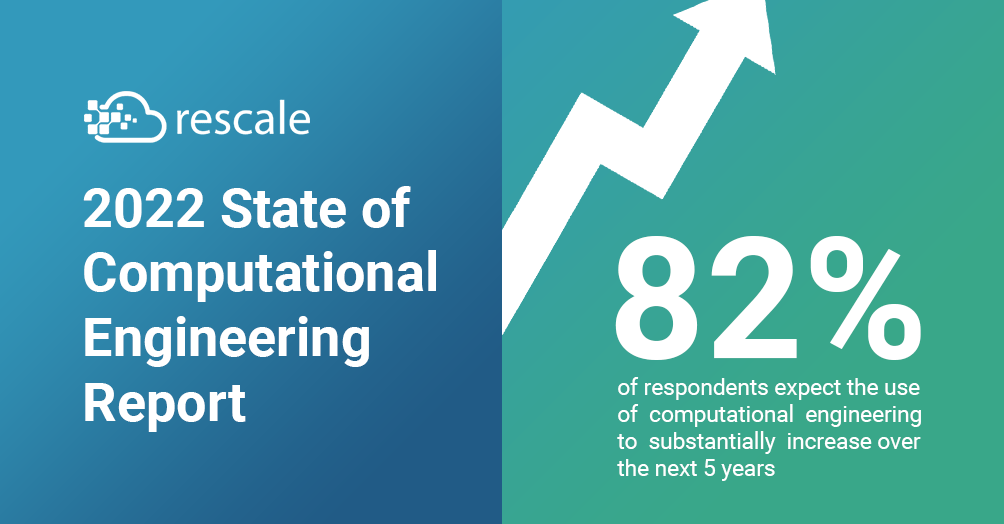
The rise of computational engineering and key insights from digital engineering and science practitioners We are excited to announce the latest Rescale report, The 2022 State of Computational Engineering, featuring survey findings from the industry’s most innovative engineers and companies building the next generation of technologies. In the past decade, nearly every industry has experienced…

As we kick off the new year, we would like to take a moment to look back on the achievements of our customers and the advancements made by scientists, engineers, and innovators on Rescale. The way many of us work and access the tools we need to do our jobs and collaborate has changed drastically. …
Rescale is proud to be the leader in delivering turnkey High Performance Computing (HPC) solutions built for the cloud. Our commitment to customers includes making state-of-the-art HPC technologies available and easily accessible to accelerate digital R&D with Rescale’s intelligent computing platform. In the spirit of fulfilling our commitment, we are delighted to announce that the…

For more information, come visit here
Cloud: From business continuity to competitive advantage IT professionals everywhere are pursuing cloud-first initiatives, accelerated by unprecedented changes in the workplace and advancements in cloud technologies. Adding additional urgency to the migration, stakeholders on the business side are ratcheting up the demand for capacity and the latest technologies to accommodate new use cases. With job…