Blog
Engineering the Future Forward
Exploring the latest digital enginering use cases, industry trends, and Rescale platform innovations.

Blog
Exploring the latest digital enginering use cases, industry trends, and Rescale platform innovations.


What the biggest trends of 2026 mean for data and AI leaders and how Rescale…

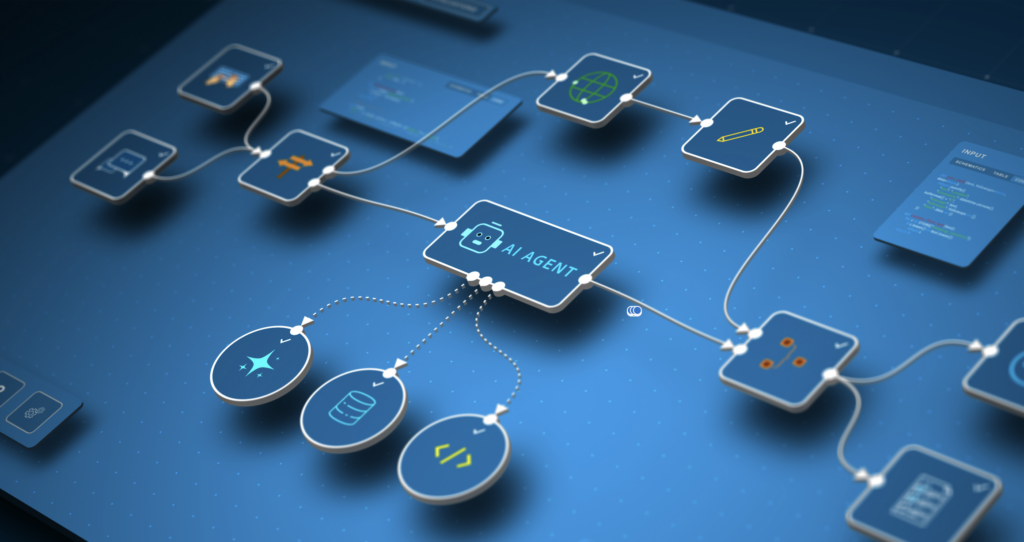
A redesigned interface that introduces new capabilities for data intelligence, and agentic workflows, and AI…

AI agents can now handle routine simulation tasks while flagging key decision points that require…
Myth #3: The Cloud Can’t Meet HPC Requirements Editor’s note: This is the 3rd blog post of the ebook Dispelling the Myths of Cloud HPC. Read the full piece here. In the early days of cloud HPC (~2010) the only types of processors available were variants of x86 architectures. Today there is now a wide range of…

Today we are excited to announce a set of features that collectively represent a key milestone for cloud operations, and enable a new level of holistic automation only available on Rescale. We call it Intelligent Resource Automation – read the announcement. I’d like to share why this milestone is a major step for the digital…

The Cloud HPC Cost Misconception and Why it Needs to be Busted
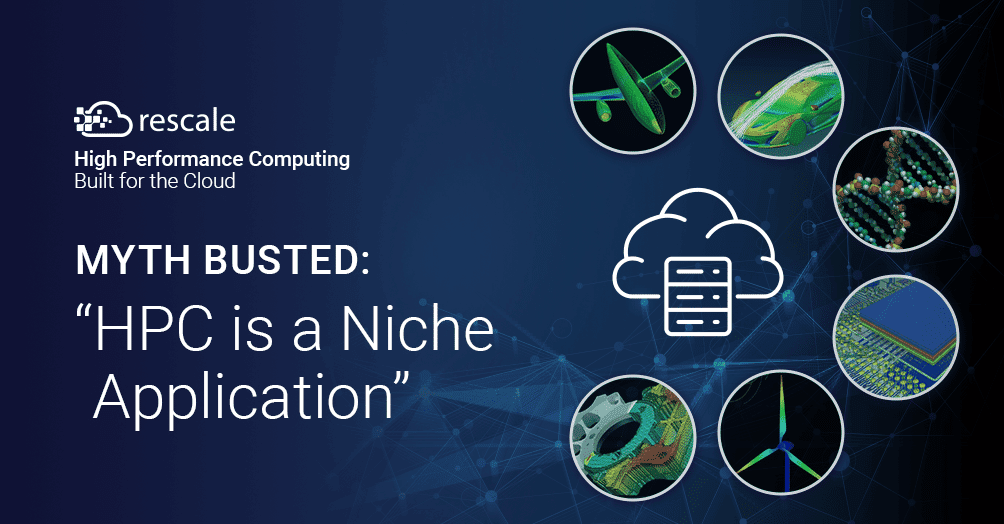
Cloud HPC is Going Mainstream. Are These Outdated Misconceptions Holding you Back?
Is your organization focused on digital transformation, but still overlooking R&D and engineering transformation? Digital transformation boils down to the integration of digital technology into all areas of a business, designed to deliver value. Desirable outcomes include reduced operational costs, greater efficiency and productivity, and an enhanced experience for customers and employees. In short, digital…

Pioneering U.S. Aerospace Innovation with FUN3D FUN3D is a NASA-developed suite of advanced Computational Fluid Dynamics (CFD) tools that is used to model fluid flow in engineering and the testing of various vehicle, projectile, and component designs. The NASA Technology Transfer Program, with its mission to ensure that innovations developed for exploration and discovery are…
Rescale has a unique vantage point on sustainability, given we serve some of the largest engineering-driven companies in the world with High Performance Computing (HPC). Our customers are creating everything from new electric personal aerial transport to commercial nuclear fusion power reactors. We are proud to be powering an engineering renaissance that is creating a…
Rescale, the leader in high performance computing (HPC) built for the cloud, is collaborating with NVIDIA and Microsoft to deliver HPC and artificial intelligence (AI) solutions to help customers power engineering and scientific innovation through increased R&D efficiency. This collaboration builds on Rescale’s existing relationships with Microsoft and NVIDIA. Rescale’s collaboration with Microsoft began in…
Scientific & Engineering Design Evolves from Prototypes to Simulation to AI Scientific and engineering simulation changed the game by enabling R&D professionals to test design parameters digitally rather than physically through prototyping, and therefore iterate faster on designs. Simulation based on physics solvers, while faster and cheaper than prototyping, can still be very computationally intensive…
How do you choose the best combinations of compute resources to optimize complex HPC simulations? AI Recommendations Are Showing us the Way Forward! Complex simulations that utilize high-performance computing (HPC) are becoming even more complex just to run due to proliferating hardware and software optionality. For many of us, cloud services can simplify the infrastructure…
Rescale Expands GCE and GKE Integrations with New Arm-based Instances Innovative organizations rely on Rescale to provide the latest cloud technologies to power their scientific and engineering high performance computing (HPC) simulations and AI workflows. Customers across many industries are running all types of specialized HPC and AI workflows on Rescale that benefit from specialized…
OVERVIEW The Case for Benchmarking in Cloud HPC Modernization R&D and engineering teams developing new, more advanced products are demanding more high-performance computing (HPC) resources to power their computation-intensive applications. At the same time, there has been an explosion of specialized HPC hardware in the cloud, pushing many organizations to explore new ways to deploy…
Engineers will always want to run large-scale, high-fidelity simulations as often as possible. How does shifting from on-prem to cloud make dreams into reality? Solving Problems with MDO and HPC Cloud Multidisciplinary design optimization (MDO) uses optimization methods to solve problems by incorporating several design disciplines simultaneously. When compared with solutions derived by optimizing each…
5. Cloud HPC: From Manual to Automated Traditional HPC is Manual The traditional HPC approach is usually script-based and therefore manual for managing engineering workflows and IT operations. There is no easy and fast way for engineers to automate end-to-end workflows for efficiency, nor for IT to automate control of multi-cloud infrastructure, applications, and security…
4. The Five Winning Strategies: From Static to Intelligent Traditional HPC is Static Given the traditional tightly-coupled approach to HPC, performance and analytics intelligence was not critical. Configurations, once stable and tuned, we not changed often, and there was no reason to, also giving little reason to invest in software/hardware performance analytics. Maintaining this approach…

3. The Five Winning Strategies: From Siloed to Connected Traditional HPC is Siloed Because traditional HPC approaches are based on tightly-coupled and bespoke technology stacks, and focus on driving high utilization of expensive computing infrastructure, there is typically little consideration for data sharing, collaboration, or integration with other systems. The result is that organizations that…
2. The Five Winning Strategies: From Inflexible to Unlimited Traditional HPC is Inflexible Traditional HPC approaches lead to tightly coupled stacks, with performance optimized for specific software/hardware combinations. This tightly coupled approach limits access to different hardware architectures, software packages (or software versions), different cloud providers, different cloud provider computing regions, as well as whether…
1. From Hardware-centric to User-centric Traditional HPC is Hardware-centric The traditional HPC approach continues to focus on maximizing hardware utilization because IT’s goal has typically been to ensure that the usages of hardware justify the cost. With finite computing capacity, IT must ensure hardware resources are not wasted. A common tool businesses use in trying…
Editors note: This post is the introduction to a 6 part blog series. Read the full report here. Empowering new product development teams to innovate faster is front and center in an enterprise’s strategy to stay competitive. Yet commercializing science & engineering breakthroughs is increasingly difficult. According to Gartner’s 2021 R&D Leadership Council Report, 90%…
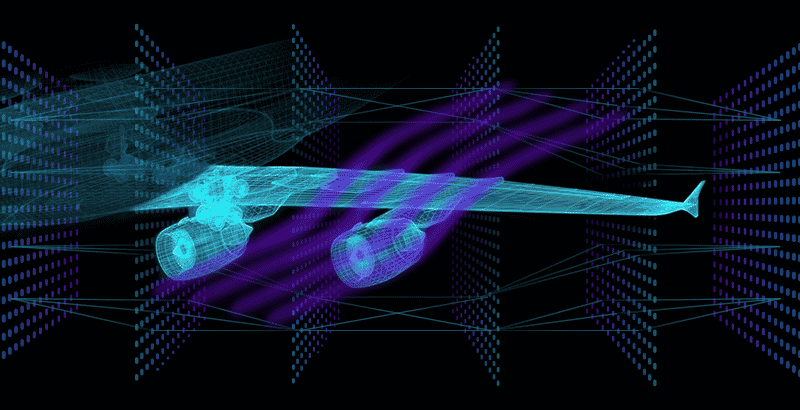
By using machine learning techniques, an airfoil design process using iterative simulations was eightfold faster to complete than using traditional methods.